Author
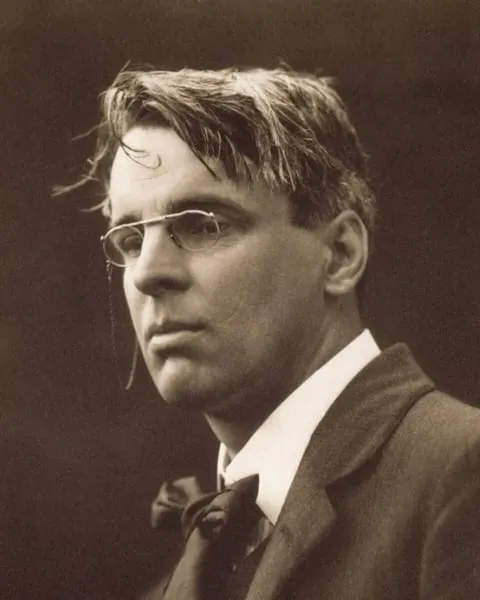
W. B. Yeats
1865-1939
Irish poet and dramatist who helped lead the Irish Literary Revival, co-founded Dublin's Abbey Theatre and was awarded the 1923 Nobel Prize in Literature.
Born William Butler Yeats.
William Butler Yeats was born on 13 June 1865 in Sandymount, County Dublin, into a Protestant family of Anglo-Irish descent. His father, John, studied law before turning to art, and his mother, Susan Pollexfen, came from a Sligo merchant family. Sligo became the place he thought of as his childhood and spiritual home. He was educated in London and Dublin, and from 1884 to 1886 attended the Metropolitan School of Art in Dublin.
His first poems appeared in the Dublin University Review in 1885. In 1889 he met the Irish nationalist Maud Gonne, who had a lasting effect on his life and poetry and refused his proposals of marriage. With Lady Gregory and others he founded the Irish Literary Theatre in 1899 and the Abbey Theatre in 1904. He had a lifelong interest in mysticism and the occult. He married Georgie Hyde-Lees in 1917, became a senator of the Irish Free State in 1922, and received the Nobel Prize in 1923.
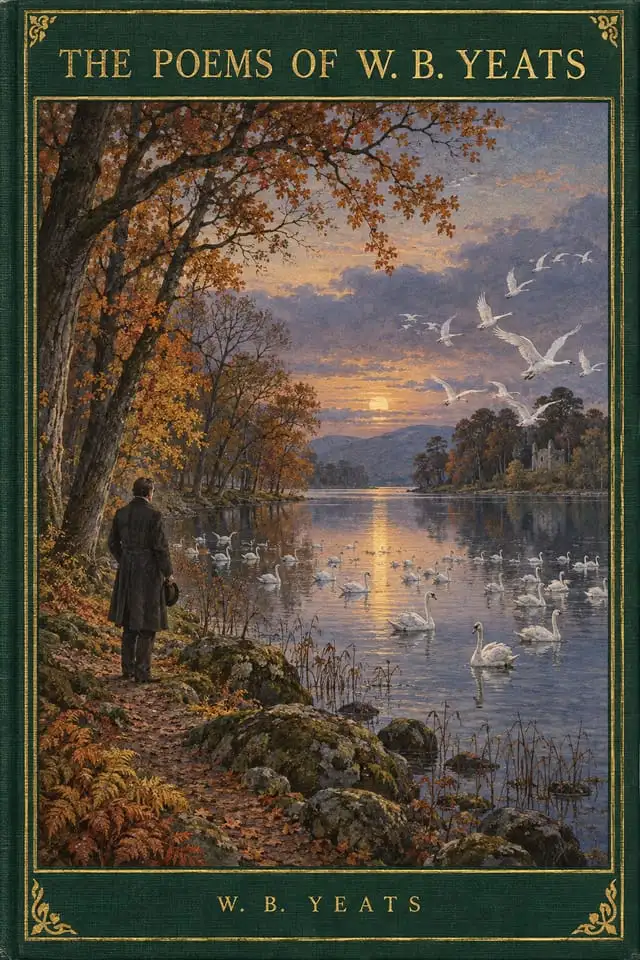
His early verse, from The Wanderings of Oisin and Other Poems (1889) to The Wind Among the Reeds (1899), drew on Irish mythology and folklore. From 1900 his poetry became more rooted in the physical world and more political, and later collections include The Wild Swans at Coole (1919) and The Tower (1928). Unlike the modernists who experimented with free verse, he kept to traditional forms. His verse can be read here in The Poems of W. B. Yeats.
Yeats died of heart failure at Roquebrune-Cap-Martin in France on 28 January 1939, aged 73.
Sources: wikipedia.org