Characters
- Oliver TwistHe learns that his parents were Edwin Leeford and Agnes Fleming and that Rose is his aunt, but returns too late to help his friend Dick.First appears: Chapter 1: Treats of the Place Where Oliver Twist Was Born and of the Circumstances Attending His Birth
- Agnes FlemingOliver's mother, Agnes Fleming, was the younger Rose's elder sister and the woman whose portrait Edwin Leeford left with Brownlow.First appears: Chapter 1: Treats of the Place Where Oliver Twist Was Born and of the Circumstances Attending His Birth
- The parish surgeonThe parish surgeon attending the birth in the workhouse.First appears: Chapter 1: Treats of the Place Where Oliver Twist Was Born and of the Circumstances Attending His Birth
- Old SallyDying, the woman who nursed Oliver's mother admits stealing her gold and concealing information about her.First appears: Chapter 1: Treats of the Place Where Oliver Twist Was Born and of the Circumstances Attending His Birth
- Mrs MannThe woman paid by the parish to care for young children at the branch-workhouse.First appears: Chapter 2: Treats of Oliver Twist’s Growth, Education, and Board
- Mr BumbleNow workhouse master and married to the former Mrs Corney, he accepts money from Monks to arrange a disclosure of his wife's secret.First appears: Chapter 2: Treats of Oliver Twist’s Growth, Education, and Board
- Mr LimbkinsThe chairman of the board, who haggles down the fee paid to the sweep Gamfield and worries that the magistrates will think the parish has behaved badly.First appears: Chapter 2: Treats of Oliver Twist’s Growth, Education, and Board
- The gentleman in the white waistcoatThe board member who hears of Oliver's attack on Noah as proof that the boy will be hanged, gives Noah a penny and tells Mr Bumble not to spare Oliver.First appears: Chapter 2: Treats of Oliver Twist’s Growth, Education, and Board
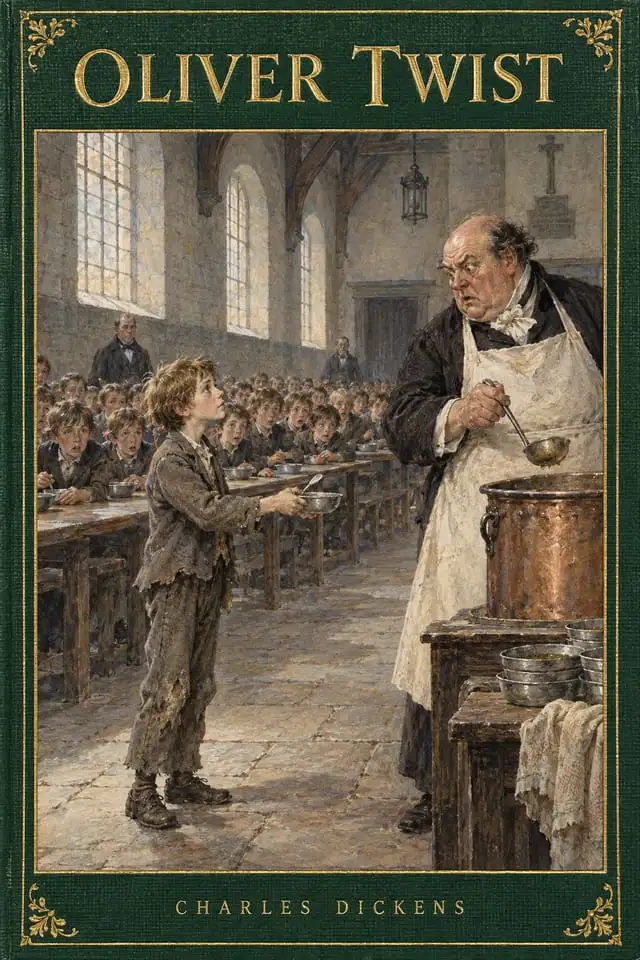
- The workhouse masterThe workhouse master, a fat and healthy man in charge of the boys' meals.First appears: Chapter 2: Treats of Oliver Twist’s Growth, Education, and Board
- Mr GamfieldA chimney-sweep who is behind with his rent and interested in the advertised apprenticeship.First appears: Chapter 3: Relates How Oliver Twist Was Very Near Getting a Place Which Would Not Have Been a Sinecure
- The magistratesTwo elderly magistrates with powdered heads, one of whom has difficulty seeing.First appears: Chapter 3: Relates How Oliver Twist Was Very Near Getting a Place Which Would Not Have Been a Sinecure
- Mr SowerberryThe undertaker, kindly disposed to Oliver as far as his small power goes, who still beats him hard to satisfy his weeping wife.First appears: Chapter 4: Oliver, Being Offered Another Place, Makes His First Entry Into Public Life
- Mrs SowerberryThe undertaker's wife, who tells Oliver his mother deserved Noah's insults and bursts into tears before her husband beats the boy.First appears: Chapter 4: Oliver, Being Offered Another Place, Makes His First Entry Into Public Life
- CharlotteThe servant who beats Oliver hard after he fights Noah and says such children are born to be murderers and robbers.First appears: Chapter 4: Oliver, Being Offered Another Place, Makes His First Entry Into Public Life
- Morris BolterPaid to follow Nancy, he hides beside the river stairs and hears her confidential meeting with Rose and Brownlow.First appears: Chapter 5: Oliver Mingles with New Associates. Going to a Funeral for the First Time, He Forms an Unfavourable Notion of His Master’s Business
- The grieving husbandA thin, pale man in a freezing room where his dead wife lies.First appears: Chapter 5: Oliver Mingles with New Associates. Going to a Funeral for the First Time, He Forms an Unfavourable Notion of His Master’s Business
- The old womanThe dead woman's mother, sitting beside her daughter's body.First appears: Chapter 5: Oliver Mingles with New Associates. Going to a Funeral for the First Time, He Forms an Unfavourable Notion of His Master’s Business
- DickA pale little boy at the branch-workhouse, Oliver's old friend and playmate.First appears: Chapter 7: Oliver Continues Refractory
- The Artful DodgerArrested after a stolen snuffbox is found on him, he answers the court with elaborate defiance but is committed for trial.First appears: Chapter 8: Oliver Walks to London. He Encounters on the Road a Strange Sort of Young Gentleman
- FaginMistaking Nancy's altered behaviour for a new attachment, he plans to follow her and use the knowledge to control her and remove Sikes.First appears: Chapter 8: Oliver Walks to London. He Encounters on the Road a Strange Sort of Young Gentleman
- Charley BatesHorrified by Nancy's murder, he attacks Sikes and calls for help in capturing him.First appears: Chapter 9: Containing Further Particulars Concerning the Pleasant Old Gentleman, and His Hopeful Pupils
- NancyAfter Fagin misrepresents her meeting to Sikes, she pleads for mercy and repentance before Sikes murders her.First appears: Chapter 9: Containing Further Particulars Concerning the Pleasant Old Gentleman, and His Hopeful Pupils
- BetOne of the two young women visiting Fagin's boys, free and easy in her manner.First appears: Chapter 9: Containing Further Particulars Concerning the Pleasant Old Gentleman, and His Hopeful Pupils
- Mr BrownlowReunited with Oliver, he accepts Rose's account and directs a private inquiry intended to recover the boy's parentage and inheritance without endangering Nancy.First appears: Chapter 10: Oliver Becomes Better Acquainted with the Characters of His New Associates; and Purchases Experience at a High Price. Being a Short, but Very Important Chapter, in This History
- Mr FangA lean, flushed police magistrate with a stern face and an irritable manner.First appears: Chapter 11: Treats of Mr. Fang the Police Magistrate; and Furnishes a Slight Specimen of His Mode of Administering Justice
- The officer in the striped waistcoatAn older officer in a striped waistcoat, standing near Oliver in the police office.First appears: Chapter 11: Treats of Mr. Fang the Police Magistrate; and Furnishes a Slight Specimen of His Mode of Administering Justice
- The bookstall keeperAn elderly man in a worn black suit who keeps the bookstall.First appears: Chapter 11: Treats of Mr. Fang the Police Magistrate; and Furnishes a Slight Specimen of His Mode of Administering Justice
- Mrs BedwinShe refuses to believe Bumble's accusations against the boy she nursed.First appears: Chapter 12: In Which Oliver Is Taken Better Care of Than He Ever Was Before. And in Which the Narrative Reverts to the Merry Old Gentleman and His Youthful Friends
- Bill SikesBesieged at a riverside hiding place, he accidentally hangs himself while trying to escape from the roof.First appears: Chapter 13: Some New Acquaintances Are Introduced to the Intelligent Reader, Connected with Whom Various Pleasant Matters Are Related, Appertaining to This History
- Mr GrimwigBrownlow's old friend, rather lame in one leg, with a large powdered head and an irritable manner.First appears: Chapter 14: Comprising Further Particulars of Oliver’s Stay at Mr. Brownlow’s, with the Remarkable Prediction Which One Mr. Grimwig Uttered Concerning Him, When He Went Out on an Errand
- Tom ChitlingA young associate newly released after six weeks in the house of correction, who defers to the younger Dodger.First appears: Chapter 18: How Oliver Passed His Time in the Improving Society of His Reputable Friends
- Toby CrackitA man in a showy waistcoat and top-boots, with reddish corkscrew curls and common rings on his dirty fingers.First appears: Chapter 22: The Burglary
- Mrs BumbleShe sells Monks the stolen locket and ring which she recovered using the pawn ticket from Sally's hand.First appears: Chapter 23: Which Contains the Substance of a Pleasant Conversation Between Mr. Bumble and a Lady; and Shows That Even a Beadle May Be Susceptible on Some Points
- Edward LeefordConfronted by his father's old friend Brownlow, he agrees to disclose the truth and restore Oliver's rights.First appears: Chapter 26: In Which a Mysterious Character Appears Upon the Scene; and Many Things, Inseparable from This History, Are Done and Performed
- Mr GilesA servant pursuing the robbers, who suggests that the party should return home.First appears: Chapter 28: Looks After Oliver, and Proceeds with His Adventures
- BrittlesA pale, deferential member of the party pursuing the robbers, who supports Mr Giles's proposal to return home.First appears: Chapter 28: Looks After Oliver, and Proceeds with His Adventures
- Rose FlemingRevealed as Agnes's sister and Oliver's aunt, she accepts Harry after he chooses a quiet life as a clergyman.First appears: Chapter 28: Looks After Oliver, and Proceeds with His Adventures
- Mrs MaylieAn elderly lady of upright bearing and carefully arranged old-fashioned dress, breakfasting with a young companion.First appears: Chapter 29: Has an Introductory Account of the Inmates of the House, to Which Oliver Resorted
- Mr LosberneA stout, energetic local surgeon whose good humour accompanies an eccentric manner.First appears: Chapter 29: Has an Introductory Account of the Inmates of the House, to Which Oliver Resorted
- BlathersA stout Bow Street officer of about fifty, with sharp eyes and a confident manner.First appears: Chapter 31: Involves a Critical Position
- DuffBlathers's red-haired, bony fellow officer, who appears less comfortable than his partner in the ladies' company.First appears: Chapter 31: Involves a Critical Position
- Harry MaylieHe declares his love for Rose, who refuses marriage despite returning his affection because she fears damage to his prospects.First appears: Chapter 34: Contains Some Introductory Particulars Relative to a Young Gentleman Who Now Arrives Upon the Scene; and a New Adventure Which Happened to Oliver
Themes
- Poverty, hunger and the Poor Law
- Charity, authority and hypocrisy
- Innocence and goodness
- Identity, birth and social class
- Nature, upbringing and crime
- Death, mourning and the undertaker's trade
- The law and justice
Context
- Farming
- Here the parish pays Mrs Mann a weekly sum for each child, and she keeps much of it instead of spending it on their care. Chapter 2: Treats of Oliver Twist’s Growth, Education, and Board
- The proposed apprenticeship
- The board offers money to a master willing to take Oliver; in this episode the magistrates must approve the agreement and refuse after seeing his fear. Chapter 3: Relates How Oliver Twist Was Very Near Getting a Place Which Would Not Have Been a Sinecure
- Poor's rates
- Sowerberry says that his payments towards the poor's rates entitle him to get as much as he can out of the parish, and therefore offers to take Oliver. Chapter 4: Oliver, Being Offered Another Place, Makes His First Entry Into Public Life
- Oliver as a mute
- Sowerberry proposes using Oliver's melancholy appearance at children's funerals, turning the boy's sadness into an advantage for his business. Chapter 5: Oliver Mingles with New Associates. Going to a Funeral for the First Time, He Forms an Unfavourable Notion of His Master’s Business
- Noah's status
- The narrator distinguishes Noah, whose parents are living nearby, from the workhouse orphan he bullies; Noah redirects the mockery he receives from other boys. Chapter 5: Oliver Mingles with New Associates. Going to a Funeral for the First Time, He Forms an Unfavourable Notion of His Master’s Business
- The Dodger's language
- The Dodger explains that a "beak" is a magistrate, while Oliver initially thinks of a bird. Their exchange exposes a difference in experience beneath the promise of help. Chapter 8: Oliver Walks to London. He Encounters on the Road a Strange Sort of Young Gentleman
- Fagin's introduction
- The narrator repeatedly substitutes "the Jew" for Fagin's name and associates that identity with a hostile physical description. Consider how the narration attaches criminal menace to Jewish identity, rather than accepting that association as evidence about Jewish people. Chapter 8: Oliver Walks to London. He Encounters on the Road a Strange Sort of Young Gentleman
- The execution
- Fagin asks about the crowd at that morning's execution, and the boys' replies show that they attended. Oliver wonders how they also found time for what he takes to be honest work. Chapter 9: Containing Further Particulars Concerning the Pleasant Old Gentleman, and His Hopeful Pupils
- The interrupted entertainment
- The narrator imagines an audience abandoning Punch in the middle of the plot to pursue Oliver, making the chase itself another public spectacle. Chapter 10: Oliver Becomes Better Acquainted with the Characters of His New Associates; and Purchases Experience at a High Price. Being a Short, but Very Important Chapter, in This History
Chapter summaries
Chapter 1: Treats of the Place Where Oliver Twist Was Born and of the Circumstances Attending His Birth
The narrator opens in a workhouse, where Oliver is born and very nearly does not live. His mother, a young woman brought in the night before after being found lying in the street, asks to see her child and dies. The surgeon is briefly kind but leaves for his dinner after noting her missing wedding ring and calling it "the old story", while the nurse sips from her green bottle. Nobody knows where the mother came from. Once Oliver is dressed in the yellowed workhouse robes, the narrator says, he is marked for life as a parish child, despised and unpitied. The chapter sets up the narrator's anger at how the poor are treated and leaves the reader asking who Oliver's mother was.
Chapter 2: Treats of Oliver Twist’s Growth, Education, and Board
Oliver is "farmed" out to Mrs Mann, who keeps most of the parish's money for herself while many children in her care die of hunger, cold or neglect. On his ninth birthday Mr Bumble, the pompous beadle who invented Oliver's surname, takes him to the workhouse to face the board of fat gentlemen. The board has decided the poor enjoy the workhouse too much, and now feeds them on thin gruel. After three months of slow starvation, Oliver is chosen by lot to ask for more, and the master and the board react with horror. The gentleman in the white waistcoat declares that Oliver will be hanged, and a bill offers five pounds to anyone who will take him. Dickens uses heavy irony throughout, praising the board's "wise and humane regulations" so that the reader sees how cruel they are.
Chapter 3: Relates How Oliver Twist Was Very Near Getting a Place Which Would Not Have Been a Sinecure
Oliver is punished for asking for more: he is kept alone in the dark, washed under the pump, caned, flogged in front of the other boys and prayed against as wicked. Mr Gamfield, a sweep who beats his donkey and is rumoured to have bruised several boys to death, wants the five-pound fee to pay his rent. The board hears that boys have died in chimneys, yet talks of saving money and haggles him down to three pounds ten. Mr Bumble tells Oliver to look happy and say he would like to be apprenticed, and assures the magistrate that the boy dotes on chimney-sweeping, but the half-blind magistrate catches sight of Oliver's horror. Oliver falls to his knees and begs to be sent back to the dark room rather than go with Gamfield. The magistrates refuse the indentures and order that Oliver be treated kindly, showing that the law can sometimes see what the parish will not.
Chapter 4: Oliver, Being Offered Another Place, Makes His First Entry Into Public Life
The board plans to ship Oliver off to sea, where, the narrator says, a skipper would probably flog him to death. Instead Mr Bumble meets Mr Sowerberry, who laughs as he admits that the coffins have grown narrower since the new diet came in, and who takes Oliver because he pays the poor's rates and wants as much as he can get out of them. When Oliver hears the news in silence the board calls him hardened, but the narrator explains that he feels too much, not too little. On the way he weeps and tells Bumble that he is very lonely, and even the beadle is briefly moved. Mrs Sowerberry greets him with complaints about the cost of parish children, Mr Sowerberry has Charlotte give him the scraps put by for the dog, and he wolfs them down. The chapter shows a boy treated as a burden and a bargain rather than a child.
Chapter 5: Oliver Mingles with New Associates. Going to a Funeral for the First Time, He Forms an Unfavourable Notion of His Master’s Business
Oliver's first night among the coffins is so grim that he wishes his bed were his own coffin. Noah Claypole, mocked himself as a charity-boy, now has someone lower to bully, and Charlotte takes his side. Sowerberry persuades his wife that Oliver should be a mute at children's funerals. In a filthy, crumbling street, Oliver sees a dead woman's husband rave that she was starved while he was in prison for begging, and her mother laugh wildly beside the body. At the parish graves the mourners wait in the rain for more than an hour while boys jump over the coffin, and then the clergyman reads the service in four minutes. Asked how he likes the work, Oliver answers honestly, "Not very much, sir", and the chapter makes the reader share his shock at how cheaply the poor are buried.
Chapter 6: Oliver, Being Goaded by the Taunts of Noah, Rouses Into Action, and Rather Astonishes Him
After his month's trial Oliver is apprenticed, and a season of measles keeps him busy walking at the head of children's funerals. The narrator mocks the mourners he sees, whose grief disappears as soon as the funeral is over. For many months Oliver meekly bears ill-treatment from Noah, Charlotte and Mrs Sowerberry. Then Noah taunts him about his mother, and when he calls her "a regular right-down bad 'un", Oliver's spirit is roused at last and he fells Noah with one blow. The narrator describes him standing upright and bright-eyed, changed by anger. Charlotte and Mrs Sowerberry beat him and lock him up, and Charlotte says children like him are born to be murderers. The chapter tests the white waistcoat gentleman's prophecy: Oliver fights not because he is wicked, but to defend the mother he never knew.
Chapter 7: Oliver Continues Refractory
Noah runs to the workhouse with false tears, and the gentleman in the white waistcoat is delighted that his prophecy seems to be coming true. When Oliver answers Mr Bumble's threats with a bold "No!", the beadle decides the boy has been overfed: meat, not madness, has given him a spirit no pauper should have. Oliver insists that Noah called his mother names, and Sowerberry beats him after his wife bursts into tears. Oliver bears it all with proud contempt, but alone in the workshop he falls to his knees and weeps. At dawn he runs away and meets Dick, a dying child from the branch-workhouse, whose blessing is the first Oliver has ever received. The chapter sets the adults' hardness against the love between two starved children.
Chapter 8: Oliver Walks to London. He Encounters on the Road a Strange Sort of Young Gentleman
A milestone tells Oliver that London is seventy miles away, and he heads there because nobody, not even Mr Bumble, could find him in so vast a city. On the road he is threatened with jail for begging, driven from innyards and mocked by coach passengers, and only a turnpike-man and an old lady save him from dying on the highway. At Barnet he meets Jack Dawkins, a boy with "all the airs and manners of a man", who talks in thieves' slang and promises him a bed with a "'spectable old genelman". They enter London at night and pass through Saffron Hill, the dirtiest and most wretched place Oliver has ever seen. In a black, filthy room Fagin is cooking sausages beside a clothes-horse hung with silk handkerchiefs, and the boys smoke and drink like men. The reader can see what Oliver cannot: the boys' friendly greeting is a search of his pockets, and the handkerchiefs are not waiting for the wash.
Chapter 9: Containing Further Particulars Concerning the Pleasant Old Gentleman, and His Hopeful Pupils
Fagin gloats over his hidden treasure and praises men who were hanged without betraying him, saying that capital punishment is "a fine thing for the trade". When he sees Oliver watching, he grabs a bread knife and threatens him, then switches back to calling him "my dear" and claims the jewels are his savings as a miser. The Dodger and Charley come back with pocketbooks and handkerchiefs, and Charley keeps laughing at Oliver's innocent answers. The morning's "game", in which Fagin walks about like an old gentleman while the boys strip his pockets, is a pickpocketing lesson that Oliver enjoys without understanding. Fagin tells Oliver to make the boys his models and rewards him with a shilling for a clean steal. The chapter shows how Fagin's warmth, food and praise are tools for turning a lonely child into a thief.
Chapter 10: Oliver Becomes Better Acquainted with the Characters of His New Associates; and Purchases Experience at a High Price. Being a Short, but Very Important Chapter, in This History
Oliver longs to go out to "work", and Fagin's habit of punishing the boys when they come home empty-handed makes him seem stern but moral to Oliver. The Dodger and Charley saunter through the streets knocking boys' caps off and stealing apples and onions, until near Clerkenwell they spot a respectable old gentleman absorbed in a book at a stall. When the Dodger takes his handkerchief and the boys run, the whole truth about Fagin rushes upon Oliver, and he flees in panic. The Dodger and Charley save themselves by joining the chase "like good citizens". The narrator describes the crowd's joy in the hunt, then turns on it with pity for the exhausted child. The old gentleman, though, says he is afraid it is the boy and asks the officer not to hurt him.
Chapter 11: Treats of Mr. Fang the Police Magistrate; and Furnishes a Slight Specimen of His Mode of Administering Justice
The old gentleman, Mr Brownlow, would rather not press the charge, and he is troubled by something familiar in Oliver's face that he cannot place. The narrator attacks the station-house cells, worse than those of condemned criminals in Newgate. Mr Fang, whose flushed face hints at drink, is in a bad mood and turns on Mr Brownlow, refusing to let him speak and threatening to throw him out. A kind officer invents the name Tom White and other answers for Oliver, who is too ill to speak, but Fang calls his faint a sham and sentences him despite the lack of a witness identifying him as the thief. Only the bookstall keeper's insistence on being sworn saves Oliver, and even then Fang sneers at Mr Brownlow for not paying for his book. The chapter shows a magistrate with great power over the poor using it with no care for the truth.
Chapter 12: In Which Oliver Is Taken Better Care of Than He Ever Was Before. And in Which the Narrative Reverts to the Merry Old Gentleman and His Youthful Friends
Oliver now receives sustained care in a comfortable home: Mrs Bedwin sits by his bed, a doctor visits, and he is fed strong broth. As he recovers he wonders whether his dead mother has watched over him, and later thinks of death and prays. In the housekeeper's room he stares at a portrait of a beautiful, mild-faced lady whose eyes seem to want to speak to him. Mr Brownlow, moved to tears at the sight of the thin child, suddenly sees that every feature of Oliver's face matches the painting, and Oliver faints. The narrator then praises the Dodger and Charley in mock-serious terms, calling their escape the act of true philosophers who look after themselves first. Charley laughs at the memory of the chase, but the Dodger is worried about what Fagin will say, and the chapter ends with Fagin noticing that only two boys have come home.
Chapter 13: Some New Acquaintances Are Introduced to the Intelligent Reader, Connected with Whom Various Pleasant Matters Are Related, Appertaining to This History
Fagin reacts violently to the boys' return without Oliver. Bill Sikes arrives and recognises that Oliver's knowledge may endanger several people. Their mutual threats reveal a criminal association held together by fear rather than trust. Nancy reluctantly undertakes an inquiry at the police office, using a costume and a performance of family distress. She learns that Oliver has been cleared and taken to Pentonville. Fagin orders the others to find and kidnap him while preparing to move his valuables.
Chapter 14: Comprising Further Particulars of Oliver’s Stay at Mr. Brownlow’s, with the Remarkable Prediction Which One Mr. Grimwig Uttered Concerning Him, When He Went Out on an Errand
Oliver's recovery gives him an experience of domestic security and affection. Brownlow promises friendship and asks for his history, but Grimwig's arrival interrupts the account. Grimwig disputes Brownlow's good opinion, partly for the pleasure of contradiction. The narrator shows that neither a charitable appearance nor a hostile manner guarantees sound judgement. Brownlow sends Oliver on an errand in part to vindicate his own confidence. The waiting watch turns the boy's absence into a test of the two men's rival predictions.
Chapter 15: Showing How Very Fond of Oliver Twist the Merry Old Jew and Miss Nancy Were
Sikes's violence towards his dog establishes the force behind his dealings with other people. His exchange with Fagin combines mutual dependence with suspicion and concealed hostility. Nancy leaves with Sikes after signalling that she has located Oliver. Encountering the boy with Brownlow's books, she performs the part of his distressed sister. The crowd accepts her story and approves Sikes's blows, making Oliver's truthful protest useless. At Brownlow's house the watch remains between the waiting men, while the reader knows why the expected return cannot happen.
Chapter 16: Relates What Became of Oliver Twist, After He Had Been Claimed by Nancy
Sikes threatens Oliver with his dog as he and Nancy take him to another hiding place. Fagin and the boys mock his changed clothes before Sikes claims the banknote. Oliver fears losing Brownlow's trust more than losing his own liberty. Fagin recognises that the apparent theft may cut him off from his protectors. Nancy's defence of the boy becomes an accusation against the adult who trained her to steal. Though she has helped kidnap Oliver, her remorse and resistance complicate the division between criminal association and humane feeling.
Chapter 17: Oliver’s Destiny Continuing Unpropitious, Brings a Great Man to London to Injure His Reputation
The narrator defends abrupt changes between comic and tragic scenes before returning to the parish. Bumble's journey concerns the cost of removing paupers rather than their comfort or safety. Dick's wish to preserve his love for Oliver meets anger and confinement. Seeing Brownlow's reward, Bumble supplies a distorted history that treats Oliver's resistance to cruelty as proof of vice. Brownlow accepts the account and forbids further mention of the boy. Mrs Bedwin opposes this apparently authoritative evidence with her own experience of Oliver's gratitude.
Chapter 18: How Oliver Passed His Time in the Improving Society of His Reputable Friends
Fagin presents coercion as a lesson against ingratitude. His story of false evidence that helped hang a disobedient boy makes the threat beneath his politeness clear. Oliver's confinement leaves him longing for any human company. The Dodger and Charley describe theft as independence, a profession and a source of pleasure. Oliver challenges their abandonment of him but cannot escape their influence physically. The narrator finally explains Fagin's deliberate progression from isolation to companionship as an attempt to change the child's moral feelings.
Chapter 19: In Which a Notable Plan Is Discussed and Determined On
Fagin visits Sikes to discuss a house whose servants have resisted attempts to corrupt them. Sikes and Toby Crackit have found another means of entry but need a small boy. Nancy appears to dismiss her earlier concern and recommends Oliver. Fagin argues that fear will make him obedient and that participation will destroy his sense of separation from the gang. Sikes explicitly reserves the possibility of killing him if trouble arises. The plan treats the child's body and conscience as resources for adults to exploit.
Chapter 20: Wherein Oliver Is Delivered Over to Mr. William Sikes
Oliver mistakes his new walking shoes for a possible sign of release before learning that he must go to Sikes. A book of criminal lives intensifies his fear and prompts him to pray for protection from wrongdoing. Nancy arrives distressed and insists that escape is impossible at present. Her bruises support her account of resistance, while her appeal to Oliver's pity helps secure his compliance. Sikes carefully loads a pistol and threatens to shoot him if he speaks without permission. The preparation for an expedition combines ordinary domestic tasks with the immediate possibility of violence.
Chapter 21: The Expedition
The journey begins amid rain and the growing noise of London's morning trade. Oliver's astonishment at Smithfield contrasts with Sikes's familiarity and purposeful haste. Sikes disguises coercion as parental authority when strangers offer them lifts. His gestures towards the concealed pistol keep Oliver silent. The long delays and uncertain destination increase the boy's exhaustion and fear. At the waterside he imagines murder before discovering that Sikes is leading him into a ruined house.
Chapter 22: The Burglary
Toby and Barney receive Sikes and Oliver at the ruined house. Food, drink and rest briefly interrupt preparations for the burglary, though Oliver remains under threat. Only at the target house does he fully understand the intended crime and beg to be released. Sikes forces him through the window and keeps him covered with his pistol. Oliver chooses to risk his life by warning the occupants instead of admitting the robbers. The sudden gunfire fragments his perceptions, and he loses consciousness after being pulled out wounded.
Chapter 23: Which Contains the Substance of a Pleasant Conversation Between Mr. Bumble and a Lady; and Shows That Even a Beadle May Be Susceptible on Some Points
The freezing street provides a sharp contrast to Mrs Corney's comfortable private room. Bumble praises a relief policy designed to discourage applicants by supplying what they cannot use. The pair treat need and death as faults in the paupers rather than demands upon their care. Their shared contempt accompanies an increasingly intimate tea. News that old Sally is dying interrupts their courtship after Bumble has kissed her. Left alone, he inventories Mrs Corney's possessions, linking courtship with material calculation.
Chapter 24: Treats on a Very Poor Subject. But Is a Short One, and May Be Found of Importance in This History
The dying woman's attendants show little concern for her suffering. Their interest in warmth, drink and convenience continues the contrast between official care and actual neglect. Sally insists on speaking privately and admits robbing a young mother who trusted her. She connects that theft with the child's lost chance of better treatment. Naming Oliver identifies the child, but her death interrupts the explanation of the gold. Mrs Corney immediately conceals the substance of the confession from the other women.
Chapter 25: Wherein This History Reverts to Mr. Fagin and Company
The Dodger cheats at cards while Charley enjoys Chitling's inability to recognise the deception. Chitling's imprisonment emerges as a sacrifice made for Betsy, exposing another unequal loyalty within the group. Fagin's encouragement sustains his willingness to be used. Toby's arrival abruptly ends the joking. His insistence on eating before explaining the failed burglary intensifies Fagin's anxiety. The report leaves Oliver's survival uncertain and sends Fagin rushing out.
Chapter 26: In Which a Mysterious Character Appears Upon the Scene; and Many Things, Inseparable from This History, Are Done and Performed
Fagin's search moves through a network of stolen-goods dealers and the Three Cripples. The landlord's suggestion of betraying a drunken guest shows how easily apparent fellowship becomes a transaction. Nancy says Oliver would be better dead than trapped among them, provided Sikes is safe. Provoked, Fagin reveals that the boy is worth hundreds of pounds to him before trying to withdraw the disclosure. Monks's later conversation confirms that he wants Oliver corrupted and removed from the country, though the reason remains unexplained. His fear of a woman's shadow interrupts their discussion without producing any discovery.
Chapter 27: Atones for the Unpoliteness of a Former Chapter; Which Deserted a Lady, Most Unceremoniously
The narrator's exaggerated respect for beadles frames a renewed display of Bumble's self-interest. His inspection of Mrs Corney's money and possessions precedes his declaration. Their anticipated marriage joins accommodation, allowances and the hoped-for vacancy of workhouse master. Mrs Corney keeps the cause of her agitation private despite his questions. At the undertaker's, Bumble finds Noah enjoying food and Charlotte's attention. His outrage at their proposed kiss exposes a moral standard shaped by rank rather than consistent principle.
Chapter 28: Looks After Oliver, and Proceeds with His Adventures
The flight from the burglary reveals fear in both the robbers and their pursuers. Giles and Brittles explain their retreat in ways that preserve their dignity, then turn the adventure into a heroic kitchen story. Oliver lies abandoned until pain and the fear of dying drive him onwards. He recognises the target house only after approaching it for help and has no strength to escape. Giles's pride in his shot initially turns the wounded boy into a trophy. The young lady's concern redirects the household from triumph over a captured thief to care for a suffering person.
Chapter 29: Has an Introductory Account of the Inmates of the House, to Which Oliver Resorted
The breakfast room offers a picture of domestic comfort and affection. Rose's gentle presence accompanies playful concern about Brittles's slowness. Losberne's energetic arrival introduces a physician whose eccentricity goes with kindness. Giles enjoys his reputation for bravery and postpones an explanation that might diminish it. After attending Oliver, the doctor suggests that the ladies' expectations of the thief will change when they see him. Their willingness to look prepares for a judgement based on the actual sufferer rather than an imagined criminal.
Chapter 30: Relates What Oliver’s New Visitors Thought of Him
Seeing a wounded child overturns the ladies' expectations of the intruder. Rose argues from youth, deprivation and her own good fortune to a duty of mercy. Losberne initially insists on hearing Oliver's account before committing himself fully. The story moves the household and gives Oliver relief from fear. Trying to protect him, the doctor uses Giles and Brittles's uncertainty and fear of responsibility to challenge their testimony. The arrival of professional officers creates a new obstacle to his attempt to keep Oliver from prison.
Chapter 31: Involves a Critical Position
Blathers and Duff arrive with professional confidence and examine the house and servants. Losberne fears that the true parts of Oliver's story which can be proved will look worse than the unprovable parts that clear him. He therefore substitutes a story about a spring-gun injury and secretly removes a ball from the companion pistol. Giles and Brittles retreat from their earlier identification under pressure and fear of responsibility. The officers' confident criminal anecdotes do not produce a successful solution. Oliver's immediate safety depends on private protection and bail rather than a public recognition of the full truth.
Chapter 32: Of the Happy Life Oliver Began to Lead with His Kind Friends
Oliver longs to repay kindness and to clear himself with his earlier protectors. A visit to the house near the bridge finds an angry occupant and an interior unlike his description, though Losberne eventually continues to trust him. Brownlow's empty house brings a more painful disappointment because Oliver fears his friends will keep believing him dishonest. The Maylies' care remains unchanged by the failure to obtain supporting evidence. Country life offers education, useful tasks, recreation and affection instead of confinement. Oliver's happiness rests on reciprocal attachment, while memories of his mother remain sorrowful without their former pain.
Chapter 33: Wherein the Happiness of Oliver and His Friends Experiences a Sudden Check
Rose's sudden fever interrupts the security of country life. Oliver tries to comfort Mrs Maylie by believing that goodness and youth must guarantee survival, but her experience challenges that assurance. She regains practical composure and sends him for medical assistance. At the inn a man shows inexplicable hatred towards Oliver and falls into a fit. Back at the cottage, suspense makes even the beauty of summer seem incompatible with threatened death. A young person's funeral corrects Oliver's hopeful assumptions before Losberne finally announces Rose's recovery.
Chapter 34: Contains Some Introductory Particulars Relative to a Young Gentleman Who Now Arrives Upon the Scene; and a New Adventure Which Happened to Oliver
Harry and Giles share the household's joy at Rose's recovery. Harry's declaration of love meets concern from his mother about future ambition and the social consequences of Rose's doubtful birth. She does not deny Rose's worth but fears that prejudice may injure both lovers. Harry joins Oliver's flower gathering while Rose steadily improves. The narrator then explores a state between sleep and wakefulness as Oliver dreams of captivity. Waking to Fagin and the stranger at the window breaks the sense that the cottage is beyond the reach of his persecutors.
Chapter 35: Containing the Unsatisfactory Result of Oliver’s Adventure; and a Conversation of Some Importance Between Harry Maylie and Rose
The pursuers find no footprints or other evidence of the visitors at Oliver's window. His certainty and sincerity persuade Harry and Losberne despite the unexplained disappearance. As Rose recovers, a private anxiety continues within the household. Harry declares his love, but she treats refusal as a duty to protect him and herself. Her concern rests on the world's judgement of her name rather than any lack of affection. She admits that a humbler life might have allowed a different answer and promises one final discussion later.
Chapter 36: Is a Very Short One, and May Appear of No Great Importance in Its Place, but It Should Be Read Notwithstanding, as a Sequel to the Last, and a Key to One That Will Follow When Its Time Arrives
Losberne jokes about Harry's sudden change of travelling plans and expected political career. Harry offers no full explanation, leaving the contrast between his public spirits and private sadness apparent. He asks Oliver for detailed letters about his mother and Rose. Oliver is delighted by the trust and agrees to keep the arrangement secret. Rose's hidden vigil at the window reveals how closely she follows the departure she has accepted. The narrator qualifies her claim of gladness by attending to the sorrow expressed through tears.
Chapter 37: In Which the Reader May Perceive a Contrast, Not Uncommon in Matrimonial Cases
Bumble's changed clothes mark a loss of the visible authority he enjoyed as beadle. His wife's resistance exposes the cowardice underlying his bullying, though he still takes out humiliation on a child at the gate. Only when personal discomfort affects him does he question the harshness of the poor laws. Monks recognises his self-interest and pays for information about the woman who nursed Oliver's mother. Bumble cannot supply the secret himself but sees a chance to profit through his wife. Monks's name is given at the end, connecting this inquiry with the earlier attempt to corrupt Oliver.
Chapter 38: Containing an Account of What Passed Between Mr. and Mrs. Bumble, and Mr. Monks, at Their Nocturnal Interview
The Bumbles meet Monks in a decaying riverside building during a storm. Mrs Bumble controls the negotiation while her husband alternates fear with ineffective claims of strength. She explains how a pawn ticket in Sally's hand led her to redeem the stolen objects. The ring records the name Agnes and a date, though the mother's full history remains unexplained. Monks destroys the physical evidence by dropping the weighted packet through a trapdoor into the water. The transaction joins official greed with a deliberate effort to prevent knowledge of Oliver's origins.
Chapter 39: Introduces Some Respectable Characters with Whom the Reader Is Already Acquainted, and Shows How Monks and the Jew Laid Their Worthy Heads Together
Sikes responds to Nancy's exhausted care with blows and demands. Fagin's gifts of food accompany haggling over money rather than uncomplicated generosity. At Fagin's house Nancy recognises Monks's voice and follows the men upstairs unseen. Whatever she hears leaves her agitated and determined to act. She waits for a chance to leave Sikes, using laudanum to secure his sleep. The hotel servants almost prevent her reaching Rose because they judge her appearance and reputation, while the cook's sympathy helps her gain admission.
Chapter 40: A Strange Interview, Which Is a Sequel to the Last Chapter
Rose's kindness breaks through Nancy's defensive manner and shame. Nancy connects her own life with deprivation and the absence of childhood protection. Her account of the overheard conversations reveals a financial bargain, destroyed evidence and Monks's claim that Oliver is his brother. Rose urges her to leave danger and offers practical help. Nancy's attachment to Sikes prevents her accepting safety, though she insists on helping Oliver without payment. The agreement to meet again depends on secrecy and a promise that she will not be followed.
Chapter 41: Containing Fresh Discoveries, and Showing That Surprises, Like Misfortunes, Seldom Come Alone
Rose struggles to find advice that will respect Nancy's confidence. Oliver's unexpected sighting of Brownlow provides a way to act without recalling Harry on her own initiative. The reunion restores Oliver's earlier relationships and vindicates Mrs Bedwin's unshaken trust. Brownlow accepts Rose's account and restrains Losberne's impulse to involve the police immediately. He distinguishes recovering Oliver's history and property from merely punishing criminals. Their plan preserves the promise to Nancy, keeps Oliver uninformed for the present and brings Grimwig and Harry into the inquiry.
Chapter 42: An Old Acquaintance of Oliver’s, Exhibiting Decided Marks of Genius, Becomes a Public Character in the Metropolis
Noah makes Charlotte carry both the luggage and the stolen money, concealing self-protection beneath claims of trust. His desire for a gentleman's life depends on avoiding work and commanding someone weaker. Fagin's secret observation lets him turn Noah's own words into leverage. Although Noah imagines joining a prestigious criminal company, his inability to dispose of the note and fear of exposure limit his freedom. He eagerly accepts the proposed thefts from children because they seem safe for himself. The new name provides a thin disguise that Charlotte's habitual speech immediately exposes.
Chapter 43: Wherein Is Shown How the Artful Dodger Got Into Trouble
Fagin adapts the principle of looking after oneself into an argument for protecting his enterprise. Noah's admiration grows together with fear of the power Fagin holds over him. Charley initially regrets that the Dodger may be transported for an insignificant theft, but Fagin recasts the danger as professional glory. Noah reluctantly undertakes the inquiry because he is unknown to the police. The Dodger treats the hearing as a stage, claiming social importance and threatening the magistrates. His verbal confidence entertains the spectators without preventing his confinement.
Chapter 44: The Time Arrives for Nancy to Redeem Her Pledge to Rose Maylie. She Fails
Nancy's decision to help Oliver coexists with painful loyalty to the people around her. Sikes interprets her urgent wish to go out as disobedience and physically restrains her. The reader understands the deadline that neither man recognises. Fagin offers apparent sympathy while imagining that a new lover explains her behaviour. He hopes she could be induced to poison Sikes and become dependent upon him through knowledge of the crime. His plan for surveillance grows from a confident misreading rather than accurate understanding of Nancy's purpose.
Chapter 45: Noah Claypole Is Employed by Fagin on a Secret Mission
Noah's successful thefts from children reinforce Fagin's confidence in his usefulness. The proposed surveillance appeals to Noah once payment and apparent safety are assured. Fagin conceals the fuller purpose while requiring detailed observation of people, places and speech. Their wait continues until Sunday provides an opportunity during Sikes's absence. At the public-house, Barney adjusts the light so Noah can identify Nancy without being seen. The final pursuit places the reader alongside a watcher whose presence she does not detect.
Chapter 46: The Appointment Kept
Nancy moves the meeting from the exposed bridge to the river stairs, unknowingly bringing her companions near the concealed spy. Her fear of death unsettles even Noah as he listens. Brownlow promises to preserve her confidence while seeking Monks's secret through private pressure. Nancy supplies a detailed description, and Brownlow recognises the red mark on Monks's throat. She refuses further rescue because she feels bound to her old life, despite hating it. Her request for a personal token from Rose distinguishes the value of human attachment from a financial reward.
Chapter 47: Fatal Consequences
Fagin's rage combines fear of exposure with frustration of his plans for Nancy and Sikes. He first makes Sikes declare what he would do to an informer, then prompts Noah's report. The questioning suppresses Nancy's insistence on protecting her old companions. Fagin's caution concerns violence that might endanger safety rather than a moral refusal of harm. Sikes confronts Nancy, who appeals to her loyalty and repeats the possibility of repentance. Rose's handkerchief becomes the visible token of compassion in Nancy's final prayer before he kills her.
Chapter 48: The Flight of Sikes
Daylight exposes the murder scene and defeats Sikes's attempts to shut out what he has done. He destroys the weapon and bloodstained pieces of clothing before leaving. His restless wanderings repeatedly bring him back towards familiar places while every encounter seems threatening. A pedlar's offer to remove a stain from his hat turns ordinary salesmanship into an unbearable reminder. Firefighting gives him temporary escape through action and noise, but consciousness of the crime returns afterwards. His plan to conceal himself in London includes eliminating the dog as evidence, though the animal escapes.
Chapter 49: Monks and Mr. Brownlow at Length Meet. Their Conversation, and the Intelligence That Interrupts It
Brownlow uses the threat of public charges to force Monks into a private confrontation. His account reveals his longstanding friendship with Monks's father and explains the portrait that resembled Oliver. A destructive marriage and a later attachment connect private suffering with family ambition and social judgement. Brownlow discloses that the destroyed will and the evidence sunk in the river are known to him. Monks yields under the accumulated knowledge and agrees to put the truth on record and restore Oliver's rights. The inquiry into origins now meets the public pursuit prompted by Nancy's death.
Chapter 50: The Pursuit and Escape
The description of Jacob's Island sets the final pursuit among neglected, unstable buildings. News of arrests shows the criminal network disintegrating. Sikes's arrival brings fear rather than the fellowship he sought. Charley's horror at murder leads him to attack Sikes and call for his capture despite personal danger. The crowd's furious desire to see the murderer repeatedly threatens disorder and harm to its own members. Sikes tries to escape by rope, but the remembered eyes terrify him at the decisive moment and he accidentally hangs himself.
Chapter 51: Affording an Explanation of More Mysteries Than One, and Comprehending a Proposal of Marriage with No Word of Settlement or Pin-Money
Returning to the town reverses Oliver's position from helpless runaway to protected child, though old sights still stir fear and grief. Monks confirms that Oliver is the son of Edwin Leeford and Agnes Fleming. The destroyed will explains why corrupting a boy's character could serve Monks's financial interest. Witnesses defeat the Bumbles' denials and cost them their positions of trust. Rose's history reveals that the same family hatred and false claims about birth have injured her, and establishes her as Oliver's aunt. Harry's choice of a quiet clerical life removes the obstacle she feared in marriage. The final news of Dick's death prevents reunion and prosperity from erasing every earlier loss.
Chapter 52: Fagin’s Last Night Alive
The trial surrounds Fagin with spectators eager for condemnation rather than sympathy. His mind moves between immediate objects and the death he cannot fully comprehend. In prison, remembered executions and approaching hours turn confinement into psychological torment. Brownlow brings Oliver to obtain the papers and to see the downfall of the man who exploited him. Fagin tells the boy where the papers are hidden but then imagines Oliver can help him escape. Oliver's prayer offers compassion while the crowd outside treats the coming execution as entertainment.
Chapter 53: And Last
The conclusion gathers the protecting households into a community founded on affection. Oliver agrees to share the remaining property with Monks so that he has a chance to reform, though Monks returns to fraud and dies imprisoned. Noah finds a legal outlet for exploitation as an informer, while the Bumbles experience the dependence they once controlled. Charley's difficult progress into honest work shows that a criminal upbringing need not decide every future. Brownlow's adoption joins recovered family knowledge with chosen parental care. The final memorial gives Agnes a place of remembrance within the church despite the shame society attached to her life.
Key quotes
he was badged and ticketed, and fell into his place at once—a parish child—the orphan of a workhouse—the humble, half-starved drudge—to be cuffed and buffeted through the world—despised by all, and pitied by none.
Wrapped in a blanket, Oliver could be a lord's child or a beggar's; the workhouse clothes decide his place in society. Dickens suggests that a person's rank depends on how the world labels them.
Identity, birth and social classPoverty, hunger and the Poor Law
If he could have known that he was an orphan, left to the tender mercies of churchwardens and overseers, perhaps he would have cried the louder.
The bitter irony of "tender mercies" sets the narrator's tone: the people meant to care for Oliver are the ones to fear.
Charity, authority and hypocrisyPoverty, hunger and the Poor Law
no wedding-ring, I see. Ah! Good night!
The surgeon judges the dead mother in a moment and walks off. Her story is dismissed as a common, shameful one, and Oliver's parentage becomes a mystery.
Identity, birth and social classDeath, mourning and the undertaker's trade
Please, sir, I want some more.
A polite, simple request from a starving child is treated as a crime. The gap between what Oliver asks and how the adults react shows how inhuman the system is.
Poverty, hunger and the Poor LawInnocence and goodness
they established the rule, that all poor people should have the alternative (for they would compel nobody, not they), of being starved by a gradual process in the house, or by a quick one out of it.
The narrator's mock praise exposes the board's choice as no choice at all: the poor starve either way.
Poverty, hunger and the Poor LawCharity, authority and hypocrisy
That boy will be hung," said the gentleman in the white waistcoat. "I know that boy will be hung.
The gentleman decides that a hungry orphan is a born criminal. The narrator refuses to say whether he is right, which raises the question of what makes a person bad.
Nature, upbringing and crimeCharity, authority and hypocrisy
the words "saving of expenditure," "looked well in the accounts," "have a printed report published," were alone audible.
The board has just heard that boys die in chimneys, yet all it cares about is cost and how its accounts will look.
Charity, authority and hypocrisyPoverty, hunger and the Poor Law
the candidate for Oliver's premium, whose villainous countenance was a regular stamped receipt for cruelty.
Gamfield's cruelty is plain to see, yet the board and the magistrate almost hand Oliver over. The image of a receipt ties his cruelty to the money changing hands.
Poverty, hunger and the Poor LawInnocence and goodness
Take the boy back to the workhouse, and treat him kindly. He seems to want it.
For once a man in authority looks at Oliver and shows him concern. His plain words make the board's treatment of Oliver look all the worse.
Innocence and goodnessCharity, authority and hypocrisy
So lonely, sir! So very lonely!" cried the child. "Everybody hates me. Oh! sir, don't, don't pray be cross to me!
For a moment Oliver speaks for himself, and his plea reveals the feeling the board has mistaken for hardness.
Innocence and goodness
since the new system of feeding has come in, the coffins are something narrower and more shallow than they used to be
The undertaker's cheerful remark is evidence that the board's diet is killing paupers. Dickens makes the reader laugh and then feel the horror.
Poverty, hunger and the Poor LawDeath, mourning and the undertaker's trade
I wish some well-fed philosopher, whose meat and drink turn to gall within him; whose blood is ice, whose heart is iron; could have seen Oliver Twist clutching at the dainty viands that the dog had neglected.
The narrator turns on the comfortable thinkers who justify such a system and wishes they could see, and share, a starving child's meal.
Poverty, hunger and the Poor LawCharity, authority and hypocrisy
I say she was starved to death. I never knew how bad she was, till the fever came upon her; and then her bones were starting through the skin.
The husband's account turns grief into an accusation of neglect. His description of starvation challenges Bumble's complaint about the family's pride.
Poverty, hunger and the Poor LawDeath, mourning and the undertaker's trade
I begged for her in the streets: and they sent me to prison.
The husband reports being imprisoned after begging for his wife. His testimony exposes a response to poverty that obstructs the care he seeks.
Poverty, hunger and the Poor LawNature, upbringing and crime
having read as much of the burial service as could be compressed into four minutes
Even the Church hurries the poor into the ground. The dead woman gets no more respect than she got while alive.
Death, mourning and the undertaker's tradeCharity, authority and hypocrisy
But yer must know, Work'us, yer mother was a regular right-down bad 'un.
Noah calls Oliver "Work'us" rather than his name and attacks his attachment to the mother he never knew. The insult targets identity as well as feeling.
Identity, birth and social classNature, upbringing and crime
But his spirit was roused at last; the cruel insult to his dead mother had set his blood on fire.
The meek, crushed child shows the "good sturdy spirit" the narrator mentioned earlier. His violence comes from love and loyalty, not wickedness.
Innocence and goodnessIdentity, birth and social class
I only hope this'll teach master not to have any more of these dreadful creatures, that are born to be murderers and robbers from their very cradle.
Charlotte voices the view that the poor are born bad. The reader has just seen Noah provoke the fight, so the novel invites us to question her.
Nature, upbringing and crimeIdentity, birth and social class
What have paupers to do with soul or spirit? It's quite enough that we let 'em have live bodies.
Bumble says openly what the parish system believes: the poor should be kept alive and nothing more. Feeling and pride are treated as faults in a pauper.
Poverty, hunger and the Poor LawCharity, authority and hypocrisy
he felt that pride swelling in his heart which would have kept down a shriek to the last, though they had roasted him alive.
Oliver refuses to let his tormentors see him suffer. His tears come only in private, which shows both his courage and how much he feels.
Innocence and goodnessIdentity, birth and social class
The blessing was from a young child's lips, but it was the first that Oliver had ever heard invoked upon his head
The first blessing Oliver hears comes from another ill-used child. Their affectionate farewell contrasts with the adults' punishment and accusations.
Innocence and goodnessPoverty, hunger and the Poor LawDeath, mourning and the undertaker's trade
It was the very place for a homeless boy, who must die in the streets unless someone helped him.
Oliver hopes London will offer what the parish never did. The thought shows how alone he is, and how easily a hungry child could be drawn in by anyone offering help.
Poverty, hunger and the Poor LawInnocence and goodness
if it had not been for a good-hearted turnpike-man, and a benevolent old lady, Oliver's troubles would have been shortened by the very same process which had put an end to his mother's
The narrator compares Oliver's danger to his mother's fate, suggesting that hardship on the road could kill him as it killed her. Two ordinary, kind people do more for him than all the officials of the parish.
Poverty, hunger and the Poor LawInnocence and goodness
There are a good many of 'em, ain't there? We've just looked 'em out, ready for the wash; that's all, Oliver; that's all.
Fagin's lie, and the boys' loud laughter at it, let the reader see the truth before Oliver does. Dramatic irony makes us fear for him.
Nature, upbringing and crimeInnocence and goodness
What a fine thing capital punishment is! Dead men never repent; dead men never bring awkward stories to light. Ah, it's a fine thing for the trade!
Fagin values the hanging of his own men because the dead cannot betray him. The law's harshest punishment protects the criminal who sent them out.
Nature, upbringing and crimeThe law and justice
He'll be a great man himself, and will make you one too, if you take pattern by him.
Fagin holds up the Dodger as a model, which recalls the question of whether people are born bad or made bad. Here we watch a child being taught crime.
Nature, upbringing and crimeInnocence and goodness
Oliver wondered what picking the old gentleman's pocket in play, had to do with his chances of being a great man.
Oliver's puzzled innocence is part humour, part warning. He trusts Fagin simply because the old man is older and must know best.
Innocence and goodnessNature, upbringing and crime
In an instant the whole mystery of the hankerchiefs, and the watches, and the jewels, and the Jew, rushed upon the boy's mind.
The moment of recognition ends Oliver's innocence about Fagin. The list of things he had misunderstood shows how much the reader saw before he did.
Innocence and goodnessNature, upbringing and crime
they issued forth with great promptitude; and, shouting "Stop thief!" too, joined in the pursuit like good citizens.
The real thieves hide among the pursuing crowd. The irony shows how participation in a public accusation can conceal guilt rather than establish innocence.
Nature, upbringing and crimeThe law and justiceCharity, authority and hypocrisy
One wretched breathless child, panting with exhaustion; terror in his looks; agony in his eyes; large drops of perspiration streaming down his face; strains every nerve to make head upon his pursuers
The narrator slows the frantic chase to focus on one suffering child. A crowd that thinks it is doing justice becomes a pack hunting its prey.
The law and justiceInnocence and goodness
I knew he was shamming," said Fang, as if this were incontestable proof of the fact. "Let him lie there; he'll soon be tired of that.
Fang treats Oliver's collapse as proof of pretending, dismissing both the officer's and Brownlow's concern. His certainty survives evidence that ought to challenge it.
The law and justiceCharity, authority and hypocrisy
within such walls, enough fantastic tricks are daily played to make the angels blind with weeping
The narrator steps out of the story to accuse the police courts, which hold power over the poor and are hidden from public view.
The law and justicePoverty, hunger and the Poor Law
something that touches and interests me.
Mr Brownlow sees Oliver as a person rather than a pauper or a thief, and begins to wonder whether the boy may be innocent.
Innocence and goodnessIdentity, birth and social class
Perhaps she does see me," whispered Oliver, folding his hands together; "perhaps she has sat by me. I almost feel as if she had.
Safe at last, Oliver's thoughts turn to the mother he never knew. The longing he showed when Noah insulted her is gentle here rather than angry.
Innocence and goodnessIdentity, birth and social class
There was its living copy. The eyes, the head, the mouth; every feature was the same.
The exact likeness raises a question that neither Oliver nor the reader can yet answer: why should a workhouse orphan resemble a lady in a gentleman's portrait?
Identity, birth and social class
Thus, to do a great right, you may do a little wrong; and you may take any means which the end to be attained, will justify
The narrator's mock praise of the boys turns into an attack on thinkers who excuse any act that serves their own interest. Selfishness, he suggests, is common to thieves and philosophers.
Nature, upbringing and crimeCharity, authority and hypocrisy
It looks more respectable, my dear.
Fagin treats the appearance of ordinary domestic life as a tool for deception.
Charity, authority and hypocrisyNature, upbringing and crime
Speak the truth, and you shall not be friendless while I live.
Brownlow offers the protection Oliver has lacked, while making honesty central to their relationship.
Innocence and goodnessCharity, authority and hypocrisy
there was nobody to care for them, had they been ever so plain.
The failure to protect Oliver depends on indifference as well as on misunderstanding his cries.
Charity, authority and hypocrisyInnocence and goodness
I thieved for you when I was a child not half as old as this!
Nancy connects her present condition to exploitation during childhood rather than an isolated adult choice.
Nature, upbringing and crimeInnocence and goodness
There were sad hearts at Mr. Brownlow’s that night.
The brief sentence records the emotional damage caused by Bumble's apparently credible report.
Charity, authority and hypocrisyInnocence and goodness
You can leave your friends, though,
Oliver exposes the gap between the boys' language of friendship and their willingness to let him suffer for their theft.
Nature, upbringing and crimeInnocence and goodness
Once let him feel that he is one of us; once fill his mind with the idea that he has been a thief; and he’s ours!
Fagin seeks psychological control through a guilty identity as well as physical captivity.
Nature, upbringing and crimeIdentity, birth and social classInnocence and goodness
whatever they make you do, is no fault of yours.
Nancy distinguishes coerced action from moral responsibility even as she delivers Oliver to danger.
Innocence and goodnessNature, upbringing and crime
Your father walks rather too quick for you, don’t he, my man?
The driver's kindly question rests on a false assumption that conceals Oliver's captivity.
Identity, birth and social classNature, upbringing and crime
Oh! pray have mercy on me, and do not make me steal.
Oliver's plea makes his refusal of the crime explicit despite the physical power exercised over him.
Nature, upbringing and crimeInnocence and goodness
The great principle of out-of-door relief is, to give the paupers exactly what they don’t want; and then they get tired of coming.
Bumble openly describes assistance as an instrument for avoiding the work of helping people.
Poverty, hunger and the Poor LawCharity, authority and hypocrisy
They would have treated him better, if they had known it all!
Sally suggests that concealed knowledge affected Oliver's treatment, exposing how conditional society's care can be.
Identity, birth and social classCharity, authority and hypocrisyInnocence and goodness
We parted company, and left the youngster lying in a ditch.
Toby's account measures the robbers' loyalty against their own safety when the plan goes wrong.
Nature, upbringing and crimeInnocence and goodness
You want him made a thief.
Fagin states Monks's objective plainly while the motive behind it remains withheld.
Nature, upbringing and crimeIdentity, birth and social classInnocence and goodness
What a opportunity for a jining of hearts and housekeepings!
Bumble's romantic language makes the financial and domestic advantages of marriage conspicuous.
Charity, authority and hypocrisy
Poor fellow! Oh! treat him kindly, Giles for my sake!
The appeal gives compassion priority over the label of thief without waiting for Oliver's history to be known.
Innocence and goodnessCharity, authority and hypocrisy
Have you seen the thief?
Losberne's question draws attention to the difference between receiving a label and looking at the person it describes.
Innocence and goodnessIdentity, birth and social class
may mercy be shown to me as I show it to others!
Mrs Maylie treats the mercy she hopes to receive as a reason to protect a vulnerable stranger.
Innocence and goodnessCharity, authority and hypocrisy
he can only prove the parts that look ill, and none of those that look well.
Losberne explains why a truthful account may still fail within a system that cannot verify its crucial circumstances.
Charity, authority and hypocrisyIdentity, birth and social classInnocence and goodness
You shall give nothing at all,
Rose answers Oliver's desire to repay care with an assurance that kindness need not be bought.
Innocence and goodnessCharity, authority and hypocrisy
it is not always the youngest and best who are spared to those that love them;
Mrs Maylie separates faith and affection from an assurance that deserving people must escape suffering.
Death, mourning and the undertaker's tradeInnocence and goodness
the sombre colours are reflections from their own jaundiced eyes and hearts.
The narrator connects the appearance of the external world with the observer's emotional and moral state.
Innocence and goodness
there is a stain upon my name, which the world visits on innocent heads.
Rose describes inherited social disgrace as a penalty imposed on people who have done nothing wrong.
Identity, birth and social classInnocence and goodness
Let it be a secret between you and me; and mind you tell me everything!
Harry maintains a private connection to the household through Oliver while departing outwardly in high spirits.
Identity, birth and social classInnocence and goodness
Dignity, and even holiness too, sometimes, are more questions of coat and waistcoat than some people imagine.
The narrator separates the appearance of authority from any inherent moral excellence in its wearer.
Charity, authority and hypocrisyIdentity, birth and social class
The first is, what may the communication be worth?
Mrs Bumble treats knowledge about a vulnerable mother and child primarily as something to sell.
Charity, authority and hypocrisyIdentity, birth and social class
You don’t suppose the young lady will see such as her; do you?
The servant assumes that Nancy's social position places her beyond the possibility of a respectful hearing.
Charity, authority and hypocrisyIdentity, birth and social class
if there was more like you, there would be fewer like me
Nancy links the difference between the women to the presence or absence of compassionate protection.
Poverty, hunger and the Poor LawInnocence and goodnessNature, upbringing and crime
The promise shall be kept.
Brownlow gives Nancy's safety and the obligation of trust a firm place in the investigation.
Innocence and goodnessCharity, authority and hypocrisy
He’d be of use to us; he knows how to train the girl already.
Fagin recognises Noah's control of Charlotte as a qualification for exploitation within his own group.
Nature, upbringing and crimeCharity, authority and hypocrisy
a regard for number one holds us all together,
Fagin presents collective loyalty as a consequence of self-protection, backed by his ability to expose his associates.
Nature, upbringing and crimeCharity, authority and hypocrisy
You have a friend in me, Nance; a staunch friend.
Fagin's assurance becomes sinister beside the narrator's disclosure of his intended manipulation.
Nature, upbringing and crimeCharity, authority and hypocrisy
to tell me where she goes, who she sees, and, if possible, what she says;
Fagin's instructions turn private movement and speech into information that can be used for control.
Nature, upbringing and crimeCharity, authority and hypocrisy
I have not done this for money. Let me have that to think of.
Nancy preserves an act of disinterested care as something she can value in herself.
Innocence and goodnessNature, upbringing and crime
not too violent for safety.
Fagin's clarification reveals that his restraint is calculated around self-preservation rather than Nancy's life.
Nature, upbringing and crimeCharity, authority and hypocrisy
a living gravestone, with its epitaph in blood.
The image makes Nancy's remembered body a persistent accusation that Sikes cannot evade by travelling.
Death, mourning and the undertaker's tradeNature, upbringing and crime
Make restitution to an innocent and unoffending child,
Brownlow makes restoration to Oliver central to resolving the wrong, beyond securing a confession.
Identity, birth and social classInnocence and goodness
He may kill me for it if he likes, or if he dares, but if I am here I’ll give him up.
Charley breaks with criminal solidarity by accepting danger rather than protecting a murderer.
Nature, upbringing and crimeInnocence and goodness
It reflects disgrace on no one living, except you who use it.
Brownlow rejects Monks's attempt to transfer the circumstances of birth into a moral stain on Oliver.
Identity, birth and social classInnocence and goodness
Oh! God forgive this wretched man!
Oliver responds to the person who harmed him with a plea for mercy rather than the crowd's appetite for punishment.
Innocence and goodnessDeath, mourning and the undertaker's tradeNature, upbringing and crime
I believe it none the less because that nook is in a Church, and she was weak and erring.
The closing affirmation refuses to let Agnes's recognised errors exclude her from love or sacred remembrance.
Death, mourning and the undertaker's tradeCharity, authority and hypocrisyIdentity, birth and social class
Talking points
These questions cover the whole novel, including Nancy's murder, Oliver's family history and the closing settlements. Compare the language used to judge people with the actions through which they reveal themselves.
How reliable are the people and institutions that claim to protect children?
Compare Bumble's account of relief with Rose's argument for helping a possibly guilty child and Brownlow's response to the final disclosures.
Look again at: Chapter 23: Which Contains the Substance of a Pleasant Conversation Between Mr. Bumble and a Lady; and Shows That Even a Beadle May Be Susceptible on Some Points, Chapter 30: Relates What Oliver’s New Visitors Thought of Him, Chapter 51: Affording an Explanation of More Mysteries Than One, and Comprehending a Proposal of Marriage with No Word of Settlement or Pin-Money
How does Fagin try to turn companionship into control?
Trace the movement from games to isolation, threats and the argument about number one. Consider what he needs children to believe about themselves.
Look again at: Chapter 9: Containing Further Particulars Concerning the Pleasant Old Gentleman, and His Hopeful Pupils, Chapter 18: How Oliver Passed His Time in the Improving Society of His Reputable Friends, Chapter 19: In Which a Notable Plan Is Discussed and Determined On, Chapter 43: Wherein Is Shown How the Artful Dodger Got Into Trouble
What does Nancy's relationship with Rose reveal about choice and circumstance?
Compare their accounts of childhood and their arguments about escape. Attend to the money Nancy refuses and the personal object she accepts.
Look again at: Chapter 40: A Strange Interview, Which Is a Sequel to the Last Chapter, Chapter 46: The Appointment Kept
How does the novel distinguish guilt from the appearance of guilt?
Compare Oliver's arrest, the investigation at the Maylies' house and the Bumbles' denials. Ask which kinds of evidence receive authority and which are ignored.
Look again at: Chapter 10: Oliver Becomes Better Acquainted with the Characters of His New Associates; and Purchases Experience at a High Price. Being a Short, but Very Important Chapter, in This History, Chapter 11: Treats of Mr. Fang the Police Magistrate; and Furnishes a Slight Specimen of His Mode of Administering Justice, Chapter 31: Involves a Critical Position, Chapter 51: Affording an Explanation of More Mysteries Than One, and Comprehending a Proposal of Marriage with No Word of Settlement or Pin-Money
How do crowds change individual responsibility in the novel?
Set the pursuit of Oliver beside the hunt for Sikes and the spectators awaiting Fagin's execution. Consider the mixture of punishment, excitement and cruelty.
Look again at: Chapter 10: Oliver Becomes Better Acquainted with the Characters of His New Associates; and Purchases Experience at a High Price. Being a Short, but Very Important Chapter, in This History, Chapter 50: The Pursuit and Escape, Chapter 52: Fagin’s Last Night Alive
What is inherited, and what can be changed, in a person's moral life?
Compare the will's assumptions about Oliver, the hatred Monks receives from his mother and Charley's eventual decision to work honestly.
Look again at: Chapter 51: Affording an Explanation of More Mysteries Than One, and Comprehending a Proposal of Marriage with No Word of Settlement or Pin-Money, Chapter 53: And Last
How do names, clothes and possessions influence the way people are read?
Look at Oliver's new suit and its loss, Noah's assumed name and the ring that Monks destroys. Distinguish temporary disguises from the evidence of family history.
Look again at: Chapter 14: Comprising Further Particulars of Oliver’s Stay at Mr. Brownlow’s, with the Remarkable Prediction Which One Mr. Grimwig Uttered Concerning Him, When He Went Out on an Errand, Chapter 16: Relates What Became of Oliver Twist, After He Had Been Claimed by Nancy, Chapter 38: Containing an Account of What Passed Between Mr. and Mrs. Bumble, and Mr. Monks, at Their Nocturnal Interview, Chapter 42: An Old Acquaintance of Oliver’s, Exhibiting Decided Marks of Genius, Becomes a Public Character in the Metropolis
How complete is the novel's restoration of happiness?
Compare Oliver's hopes for Dick with the final community around the parsonage. Consider why the last image remembers Agnes rather than ending with property or marriage alone.
Look again at: Chapter 51: Affording an Explanation of More Mysteries Than One, and Comprehending a Proposal of Marriage with No Word of Settlement or Pin-Money, Chapter 53: And Last